Celia de Serra
Slow Time
4 May - 1 June 2024
I draw in charcoal and pencil - mostly landscapes featuring woodlands, hillsides, waterways and scrub - some forgotten places, some beauty spots, some reinvented. My pencil drawings are small, intimate works; my charcoal drawings tend to be larger scale. My work is all quite ‘involved’ and takes a long time to resolve; and although I make the finished pieces in my studio, I probably spend half my working time exploring, sketching, photographing and editing. I frequently revisit places again and again to get a proper sense of them - looking for compositions that have ‘something about them’. I’ll focus on atmosphere, mood, changing weather patterns and the transforming effect of transient light. I describe my way of drawing as ‘push/pull’ - surfaces can be highly worked, with marks and tone built up to create depth and a sense of ‘being there’. I then will often erase back in places to make complex and abstract surfaces. Drawing has become an ideal medium for me, there’s no colour to obscure the marks and the tones, and I can hopefully get to a sense of what I want with some clarity.
‘Regeneration’ depicts an upland hanging valley and the collapsed workings of the former Bryneglwys slate quarry near Cadair Idris in Southern Snowdonia. When the quarry was opened in 1840 the men would hand cut huge slabs of slate which would then be hauled down the mountain side by pony drawn carts. Latterly a narrow railway track was gouged into the mountain, the remains of which can be still seen today.
Below the quarry there is a rocky river gorge, with cascading waterfalls and pools, which cuts through the unspoilt woodland of Nant Gwernol. I was particularly drawn to the idea of nature reclaiming the spoils of this once industrial wasteland, the traces of huge human undertaking etched into the landscape - now sparse trees struggle precariously upon heaps of shining slate, and nature stakes its territory. Very little remains of the toils that took place in this despoiled land, the heart of past industrial endeavour and significant wealth.
‘Precipice Lake’ is a mountain lake to the north of Cadair Idris (the mountain in the background) Another stormy day with the rain coming in from sea to the west, and I keenly felt its bleak beauty reflected in the still lake.
‘Fall’ is Hambledon Hill in the autumn. This hill fort dominates the landscape all around with its dramatic ramparts. I was interested in the bulbous and animalistic like shapes of the trees and scrub at its base, writhing in contrast against the bleak, still, aged hill.
‘Towards This Place Lightly’ is an old drovers road tracking through the ancient broadleaf woodland of Lewesdon Hill, West Dorset. I have made drawings of this hill for many years, having spent part of my childhood living in a village nestled beneath its slopes. It’s an iron age hillfort with ramparts that are mostly covered in trees.
Celia trained at Exeter University, studying English Literature alongside Fine Art, and since graduating in 1995, has exhibited her work throughout the UK in galleries and art fairs. She has also completed a couple of public commissions for two NHS Trusts and a collection of her paintings remain on permanent display at Somerset and Dorset County Hospitals. This is Celia's fifth exhibition at The Art Stable.
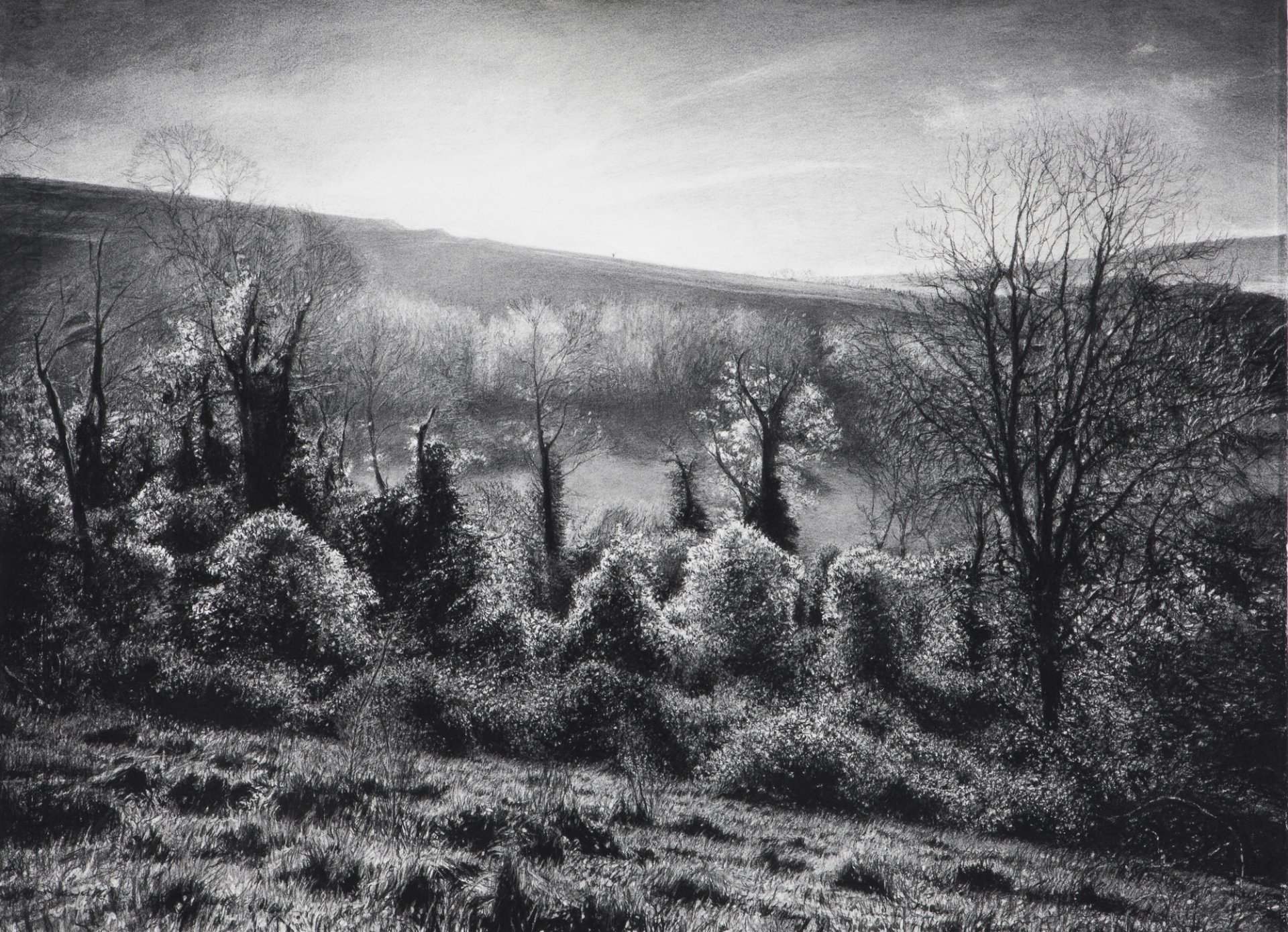
Fall, 2024
charcoal on paper
56 x 76 cm
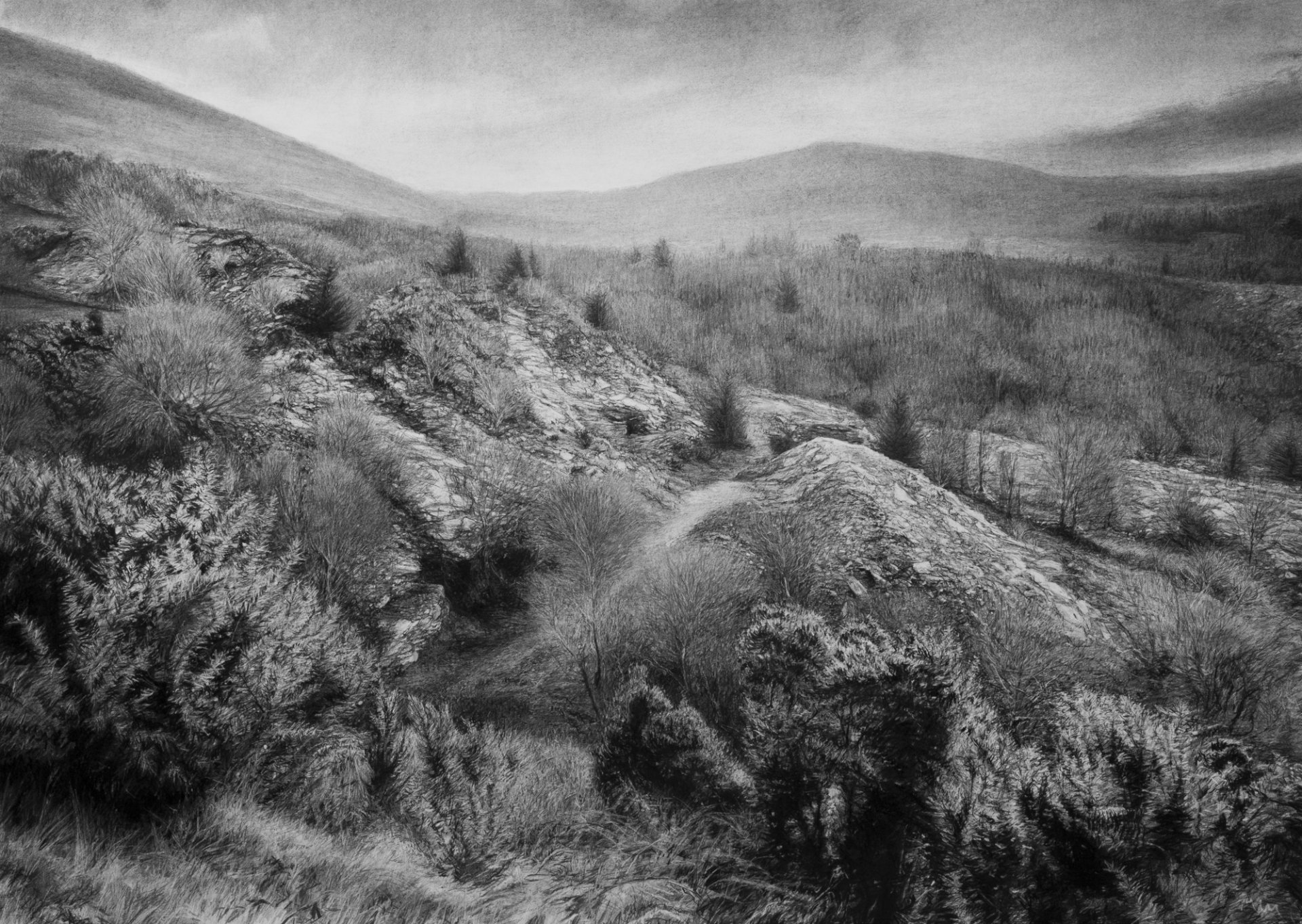
Regeneration, 2022
charcoal on paper
75 x 105 cm
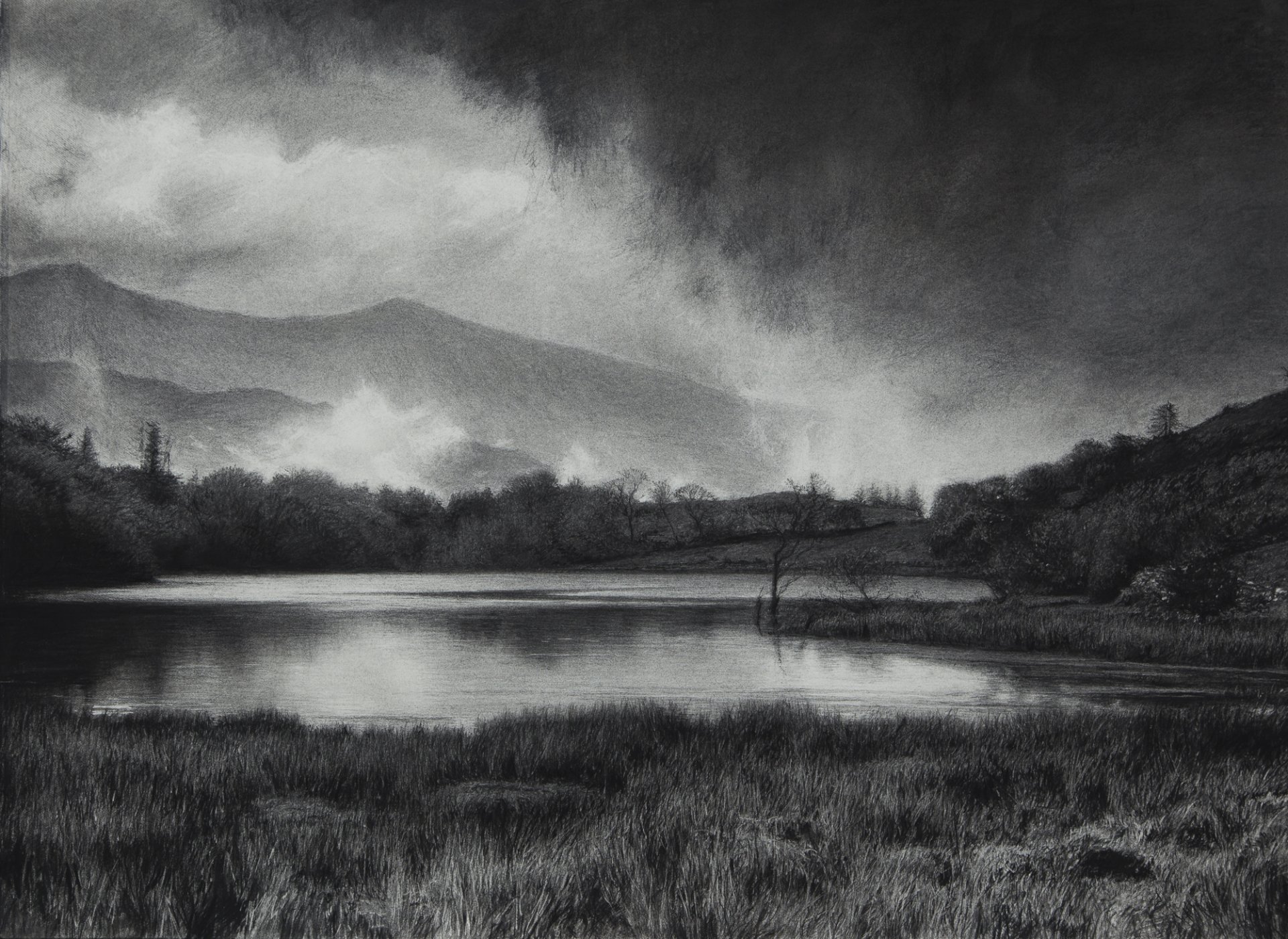
Precipice Lake, 2023
charcoal on paper
56 x 76 cm
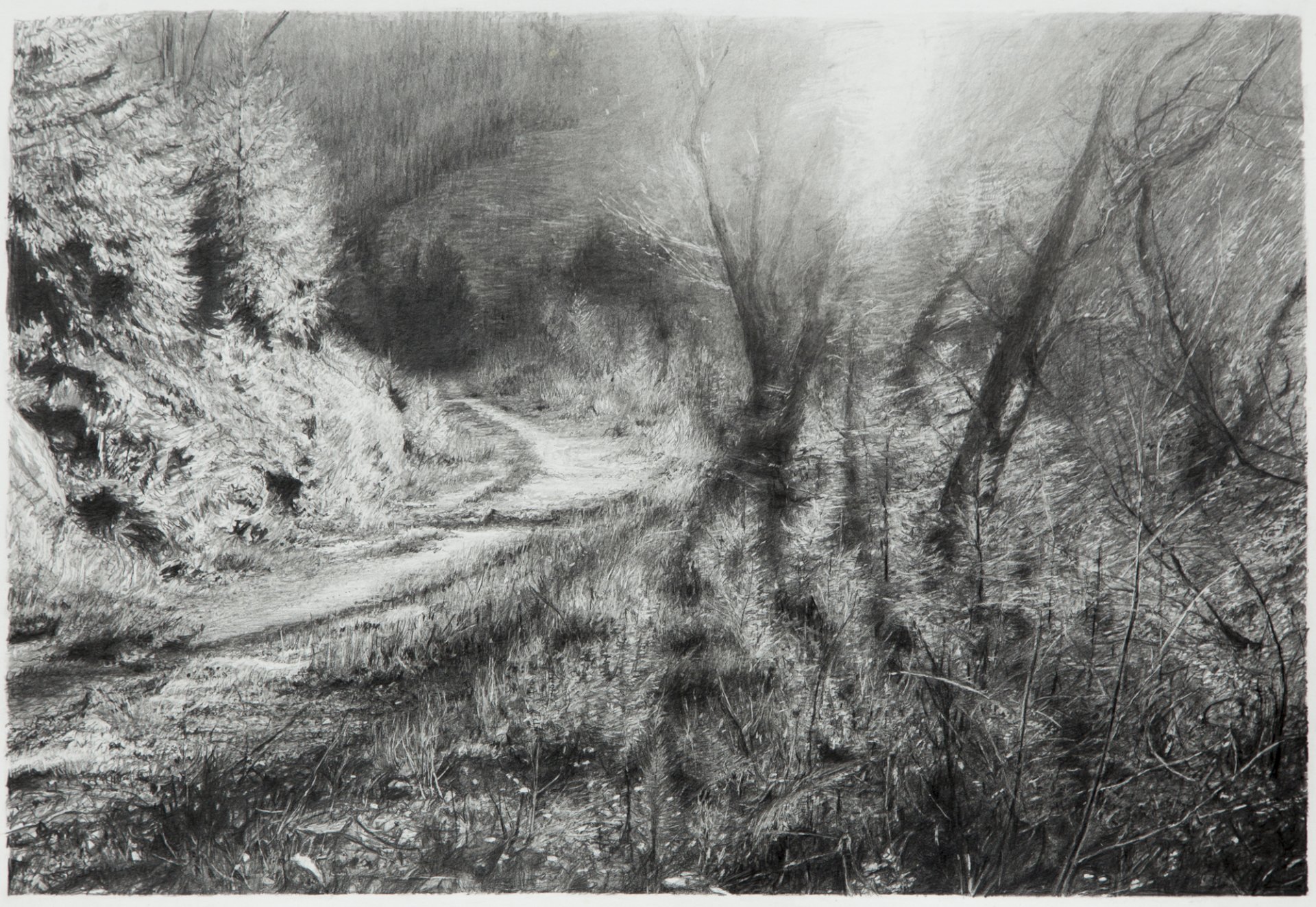
Fast Light, 2023
pencil on paper
26 x 36 cm

Edge of the Wood
charcoal on paper
75 x 105 cm
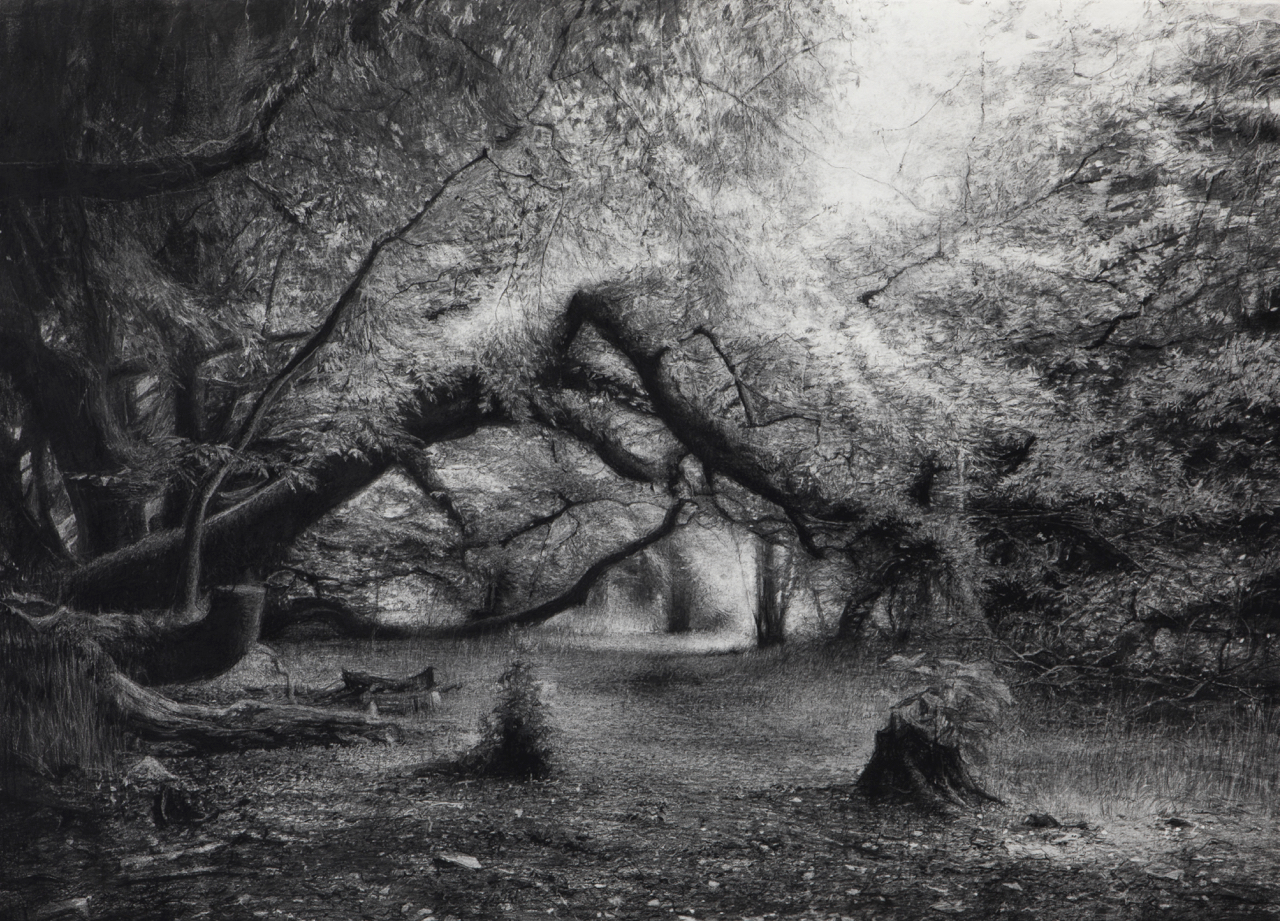
Towards this Place Lightly
charcoal on paper
75 x 105 cm
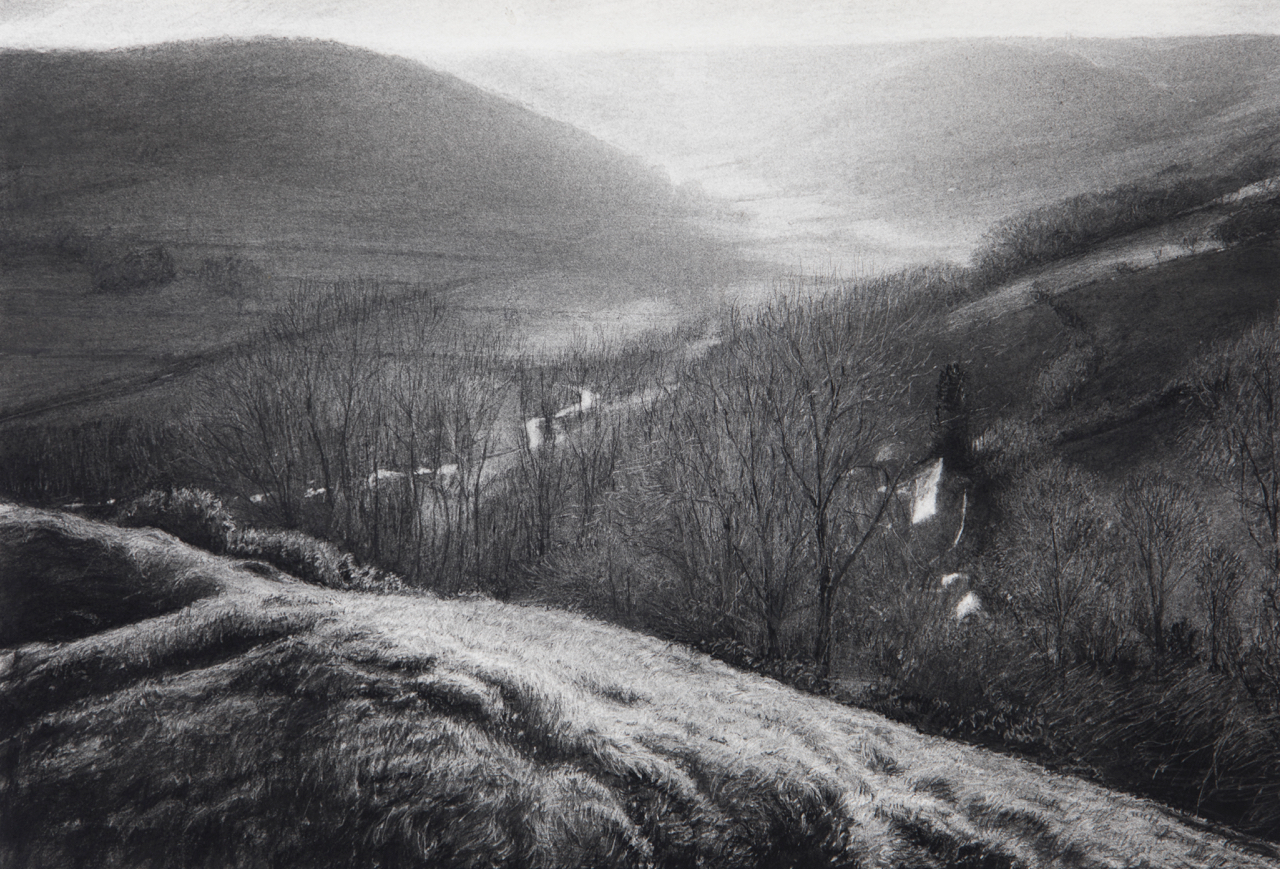
Autumn at the Pottery
charcoal on paper
38 x 56 cm
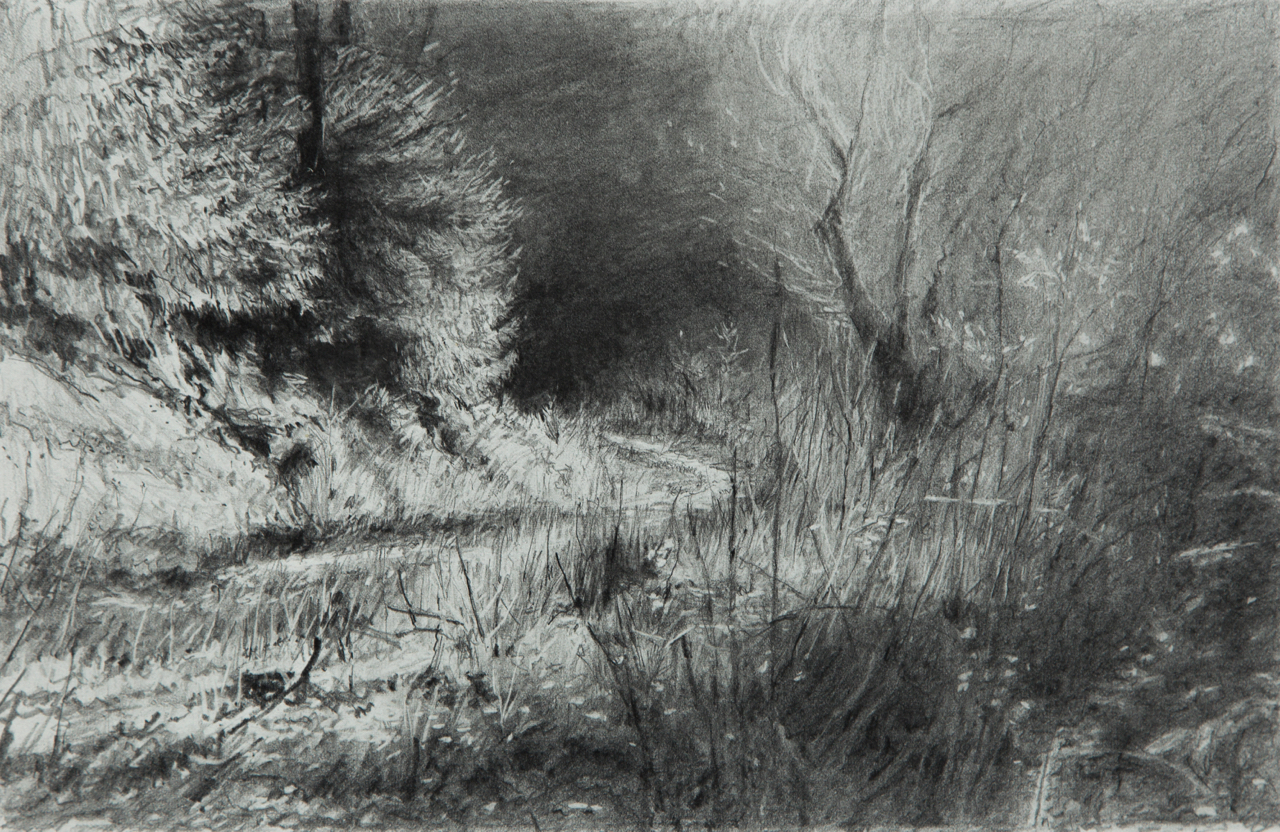
Path Light
pencil on paper
16.6 x 26 cm

The Mooring
pencil on bristol board
18 x 26 cm
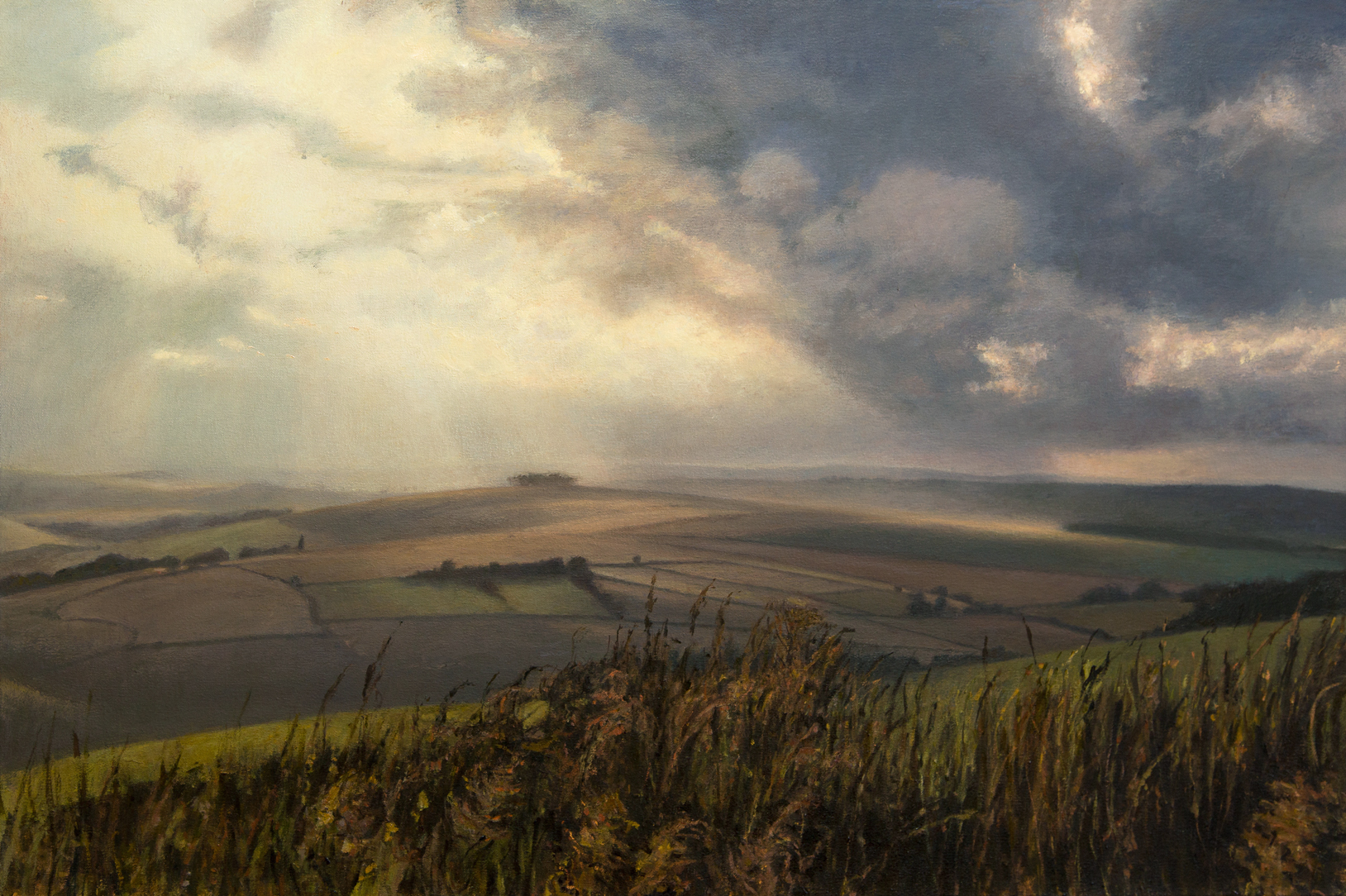
Hanging Valley
oil on canvas
60 x 90 cm